Sunday, August 15, 2010

Ruthless 'er Rootless summer for cool season grasses!!!

Some of the greens are starting to show mostly physiological stress from this season's challenging weather conditions. Today's blog is intended to give a brief explanation as to why and what is happening and what staff has been doing to keep the turf alive to this point and what corrective measures/plans are in place for the quickest recovery...University studies have documented that cool-season grasses such as bentgrass and poa have root mass loss when soil temperatures hit 80-degrees and 72-degrees respectively. When roots die back the plant no longer produces carbohydrates (fuel) while respiration (similar to people sweating) continues to cool the plant. An analogy would be fill your car up with gas and drive until it runs out of gas.

In 2010 we have had more 70-degree nights than any year since 1959. Soil temperatures basically follow the night time or low daily temperatures. July into August set a new record for consecutive days of 80-degrees or above. Near record rains in June and July further damaged root systems.

The greens at WGC have a history of poor subsurface drainage that can be managed to provide a near private club level putting surface (traffic notwithstanding) most every season. Hand watering has been the norm in July so as to not over water. This is critical until the green dries enough to use the sprinklers. Staff has utilized our 'Toro Procore 648' (the best greens aerator in the world) since mid July "venting" or solid-tine aeration to punch tiny holes (smaller than a pencil) and provide increased gas exchange as the July wet weather came around. This procedure has been ongoing with an average of three greens per day being vented providing from 50,000 to 60,000 holes per green. As most green's root system is only an inch or two deep staff has been concentrating sustaining and recovery methods in this zone.

#5 Green with Brown Patch/Rhizoctonia solani disease due to breakthrough from preventative fungicide spray program. Breakthrough was caused by application and equipment issues and exacerbated by these recent prolonged hot and very humid conditions. Greens #12 and #13 which have performed the strongest until last week have slight damage from a fertilizer burn due to the spray gun sticking at times.

#16 Green also with Brown Patch. When climatic conditions change the turfgrass will grow out and through the diseased spots.


Staff will continue venting the greens on a 7-10 day rotation and use prudent hand watering and sprinkler methodology until greens fully recover. Once weather conditions break and return to normal (or below normal for a week or two) from these high temperatures and high humidity the turfgrass should recover just fine in a few weeks. WGC has a 1/3 acre bentgrass Nursery Green that will be utilized once the weather pattern changes and the greens show what recovery is left in their reserves'. This situation brings staff a great opportunity to introduce much newer varieties of bentgrass through seeding and plugging than the varieties these greens were sodded to over twenty plus years ago. Since the technology boom of the 1980's and 90's university turfgrass genetics and plant breeding made tremendous advances. #15 Green has direct evidence built into it. In 2008 the first (and only to date) drain line was installed from the front left of the green to the back right side basically following the swale of the green. Sod from the Nursery Green was used on the drain line. The stronger, much greener turf is easy to see every day if you just look from northeast to southwest as you approach the green.

Sunday, July 25, 2010

Winnetka OPEN today Sunday July 25th less than 24 hours after 4.12" rain!!!

Winnetka Golf Club takes over twice the acreage of storm water than the course itself. The primary function of the course is flood relief for the community followed by recreation. All greens were cut and rolled today. Sorry the gas carts are not running today.
Hole #1


Hole #5


Hole #9


Hole #15


Hole #16


Hole #18

Saturday, July 24, 2010

Winnetka GC has 4.1" of rain in the official raingauge & why lightning should be respected!

Rico playing lumberjack on #7 Tee.
An Ash tree along the path from the old halfway house to #7 Green took a direct lightning hit last night. Splintering into hundreds of pieces some over 50 lbs. and thrown 175 feet. The debris (2 lbs. piece not in any photos) furthest located was 200 feet away on #4 Fairway!

#12 Tee showing the largest splinter and an impaled splinter.


Rico holding up the 80 lbs. largest splinter.


#12 Tee impaled splinter.


Close up #12 Tee impaled.


Debris #4 Fairway over 200-feet away!


Rico with longest splinter in #7 Fairway


Rico next to Ash tree.


Make sure to check in Sunday morning with the Pro Shop 847-501-2050 to see if the course drains down and can be opened for play. Carts will not be running on Sunday if course is open.

Thursday, July 22, 2010

Winnetka National has a Fruit Orchard?!? AND why is #18 Pond orange???

#18 Pond has an orange color...why?

The pollen from the Hawthorne Tree is the reason. This a natural phenomenon and nothing is wrong.

The Winnetka National Orchard located adjacent to the Nursery Green and between #16 Tee complex and the #17 Hole. There are four (4) Apple Trees, three (3) Peach Trees, and also a Pear and Plum Tree. We used to have six assorted (sweet & sour) Cherry Trees but those were lost during the Great Flood of September 2008. The fruit is all edible and we have never sprayed any plant protectants (pesticides) opting for a natural approach. Just make sure to beat the deer to the apples as they push against the fence!

Peach Fruit

Pear Fruit

Apple Fruit

More Apple Fruit

Saturday, June 26, 2010

Bluebird Update...Great news!!!

A good comprehensive Bluebird book with some great pictures of these beautiful songbirds.

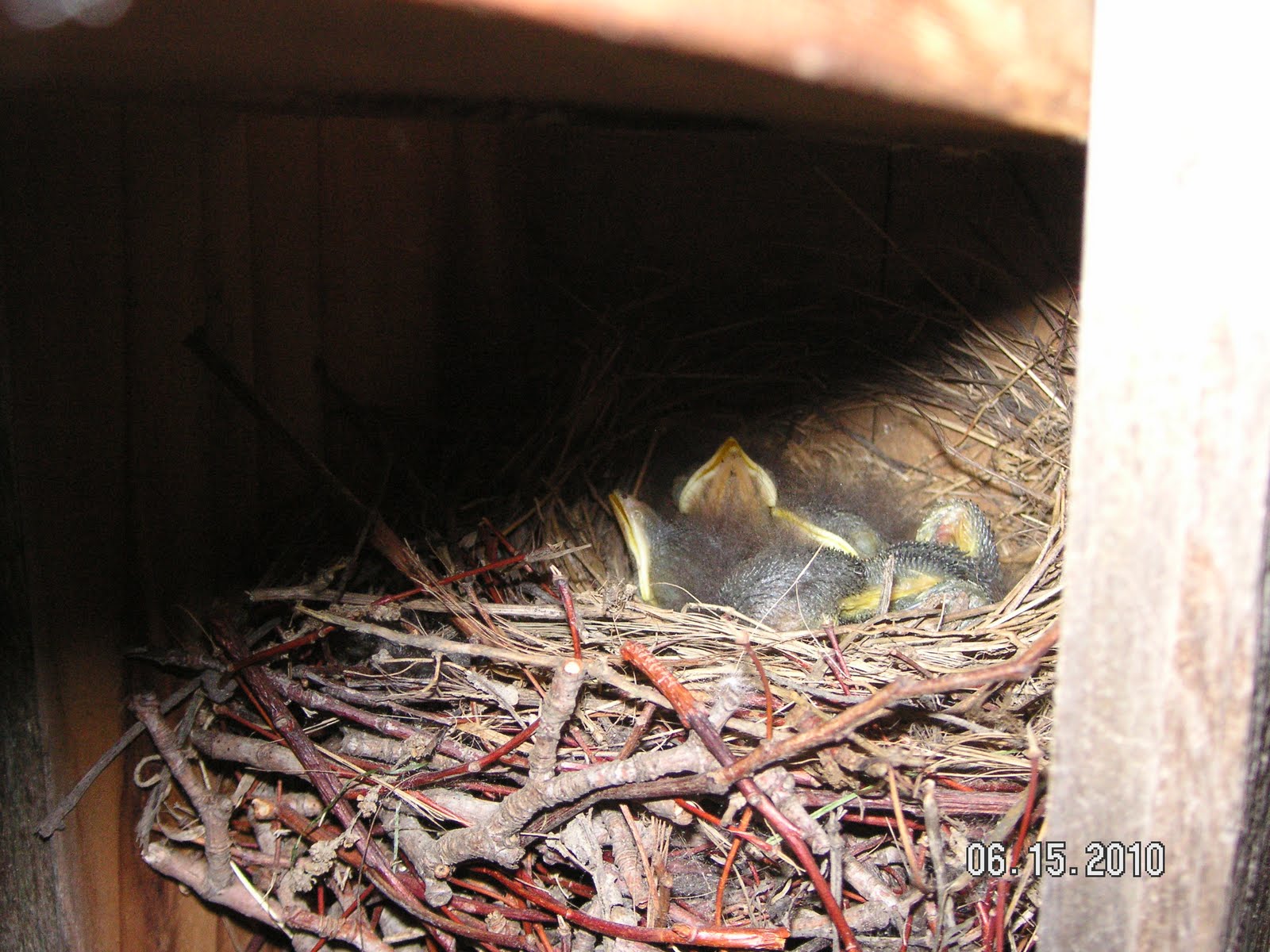
Winnetka Golf Club manages 32 Bluebird nesting boxes. This season there have been nine boxes used by the Tree Swallows which are another desirable bird species. Presently there are four active boxes occupied by bluebirds. The slightly hidden box at the yellow traffic post entrance/Par-3 GC #5Tee has babies ready to fledge. The box just past the #14 Tee berm on the left side next to the pond has four eggs being incubated. #2 Rough left hand side has babies only a few days behind the #11 Tee box that has been highlighted in these last two blogs. This is the most successful year since the West Nile Virus (2003+) decimated the bird population. Hardest hit were the Chickadees, Crows and Bluebirds. The bluebirds will have a second ands sometimes third clutch of babies in any season before fall. The offspring from previous clutches will frequently help the parents in feeding the young insuring success.


Bluebirds at #11 Tee 4-6 days old. This photo caught one baby instinctively opening its' mouth for food. Sorry the picture only uploads sideways on the blog!


Bluebirds at #11 Tee now 6-8 days old. The box will be monitored daily, but we will no longer open, so they don't prematurely jump out of the box. All four look healthy and should fledge latter next week.


Approximately 50 mealworms are left daily for the parents to feed their babies. Mealworms are typically used by anglers for fish bait.


A Wrens nest with babies near #18 Green. Notice the nest is predominately sticks and stems.


Old 33-vinyl-LP of George Wettling's (Blues) Allstars found at a garage sale was a 'must buy' for a quarter just for the picture!

Friday, June 18, 2010

ATTENTION Bluebird watchers!!! Two nest boxes with eggs #2 Rough (west side) & #11 Tee complex


Please comply with signage and please use common sense to avoid hitting box.

Bluebird box at #11 Tee cart path.


Four eggs during incubation that typically takes 10-12 days.


2-Day old babies. All plump and healthy balls of peach-fuzz type feathers. Notice the beaks by the yellow line. When opening the box at this stage they instinctively raise and open their mouths. Took a few pictures to get one in focus thus they knew I was not their parent and layed still. Bluebirds have made a huge comeback over the last few decades from people actively monitoring their nesting boxes. Staff is a long time member with the BRAW- Bluebird Restoration Association of Wisconsin.


The first few days the parents feed the babies fruit. The Serviceberry shrubs intentionally planted throughout the course are a primary fruit used by the Bluebirds. This photo shows a mass planting of serviceberries in spring bloom to the west of #10 Tee/back of #15 Green. Watch for bluebirds picking fruit here and at #7 Tee hedgerow.


Close-up of the edible fruit. The berries are ripe when dark blue or purple and taste very similar to blueberries. Please stay tuned to the plight of our new born bluebirds on the next blog. English House Sparrows and extreme weather are the two major hurdles for these babies to clear before they fledge in 12-14 days.

Wednesday, June 9, 2010

Talk about a "Fried-Egg Lie", wildflowers and a GOOD Blackhawk omen for game-6 tonight!!!


Close-up of Snapping Turtle laying eggs in the #12 Green Sand Bunker. Please note when she was done, we covered up the hole and staff watches daily for activity.

Another 'Snapper' laying eggs..."believe-it-or-not" in the front bank of #14 Tee.


Dames Rockets growing near #14 Green. They can also be found throughout the dike on Holes #14-16-17-18 as well as the wildflower berms on #13.


The "official Winnetka Golf Club rain gauge" total from yesterday...the day before Lord Stanley's Cup is present in Philadelphia for game 6 tonight...was .61-inches of rain. The last time the Blackhawks brought the cup home...1961 !!! Let's Go Hawks!